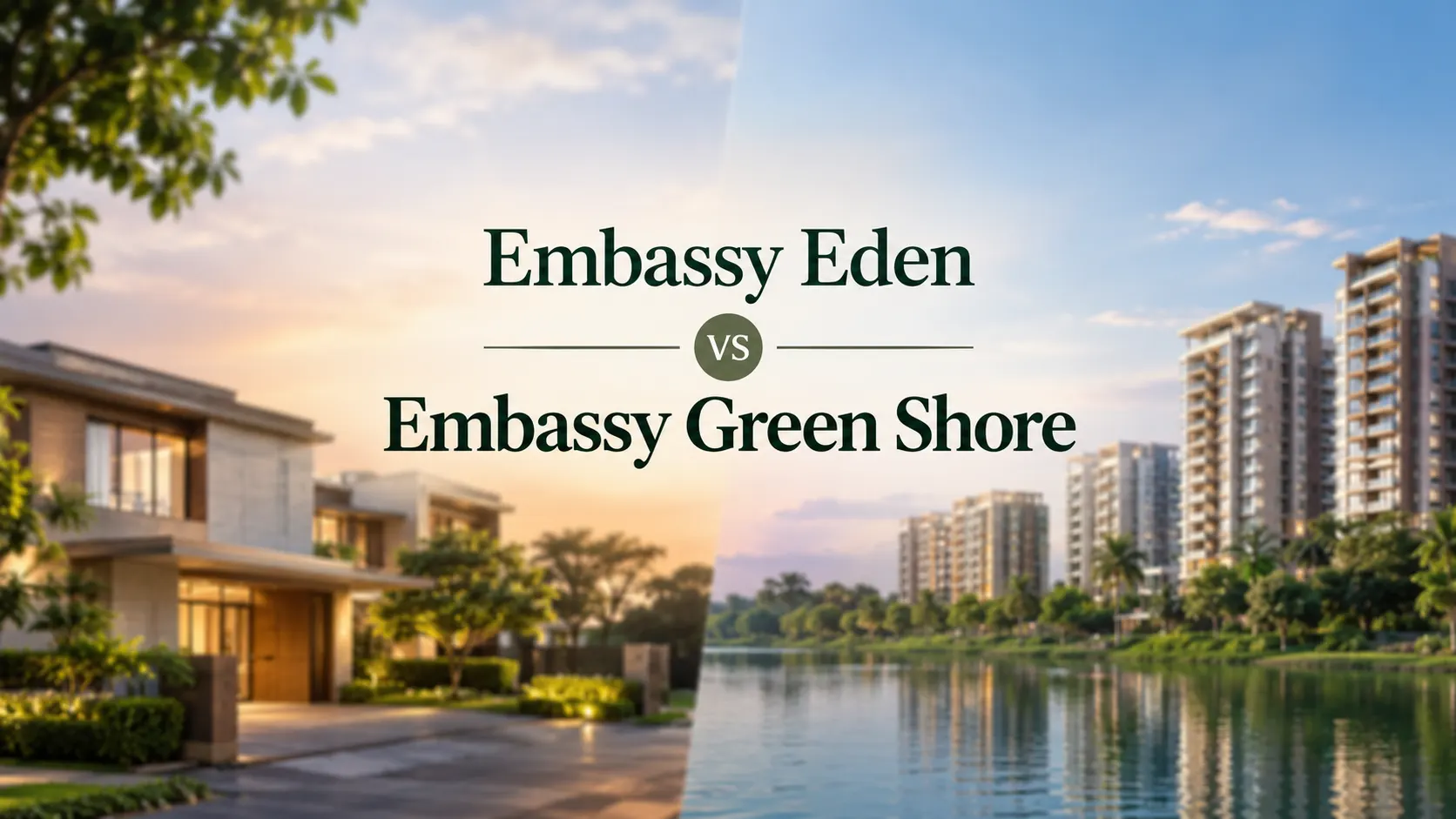
Behind every brochure image is a set of planning and engineering choices, and those choices are the focus of this Embassy Eden vs Embassy Green Shore comparison. Both are new Embassy Group projects in the North Bengaluru airport corridor, but they treat land, buildings, services and safety in very different ways.
Embassy Eden is a 95-villa estate on about 30 acres at Bettahalasuru, designed by Thomas Associates with private lifts, gardens and terraces. Embassy Green Shore is an eight-tower development of 878 apartments on about 14 acres in Embassy Springs, Devanahalli, designed by architect Jayant Vaidya within a master plan by RSP Design Consultants. This article compares their site planning, building design, services and safety systems, along with the key approval and possession facts buyers should note before booking.
Site Planning Choices: Low Density Villas Against Joined Towers
Embassy Eden’s master plan uses only a fraction of its development rights. Ground coverage is around 25%, and the proposed FAR of 0.583 compares with a permissible 2.50. Open land is shared between a green belt of about 45,722 sq m, parks of about 14,631 sq m and internal roads, with roughly 1,600 trees to be planted.
Embassy Green Shore uses almost its full FAR, 2.48 against 2.50, but concentrates it vertically. Eight tower cores are joined into one structure in a staggered east-west band, keeping ground coverage to 15.39% and leaving about 84% of the site open.
Setbacks of 16 metres on all sides and an 8-metre fire driveway surround the building. The Embassy Eden vs Embassy Green Shore planning contrast is horizontal spread against vertical concentration.
Building Design, Layout Efficiency and Home Features in Each Project
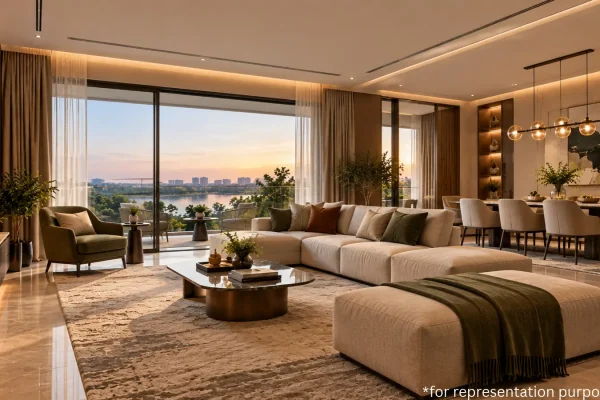
Each Embassy Eden villa is an RCC-framed home over ground plus two floors and a terrace, with a lift-served lobby, centralised HVAC, solar panels, Villeroy & Boch sanitaryware and Hansgrohe fittings. Every villa also has a staff room with its own entrance and up to four covered car parks.
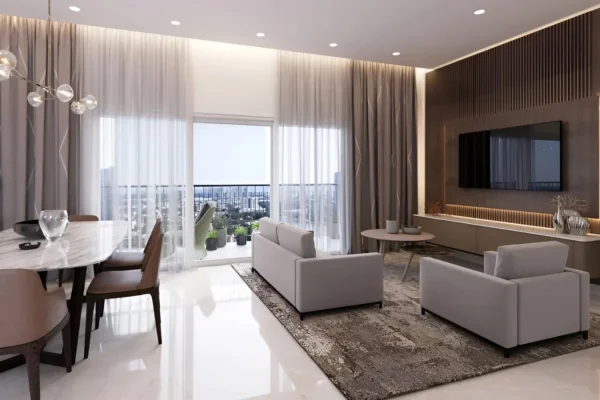
Embassy Green Shore’s towers mostly rise to G+18, with Towers 1 and 2 at G+16 and G+17 per the fire NOC. Balconies are provided from the first floor in every tower, which under NBC 2016 removes the need for refuge floors and returns that area to homes.
Carpet-to-saleable efficiency is estimated at about 68% to 70%, and most towers have three passenger lifts plus a fireman’s lift. In Embassy Eden vs Embassy Green Shore, design detail reflects the needs of a villa versus a tower.
Water, Power and Waste Systems Supporting Both Residential Communities
Sustainability at Embassy Eden is handled at project level, while Embassy Green Shore draws on its own systems and on the infrastructure of the wider Embassy Springs township. The township runs its own water treatment, sewage treatment and a 220 kV power substation, which Green Shore will connect to, with an assessed load of 6,419 KVA.
Eden provides 100% DG power backup, while Green Shore’s six 500 KVA generators serve common services such as lifts, firefighting systems and corridor lighting. Both projects include rainwater harvesting and the reuse of treated water for flushing and landscaping. Eden also uses LED lighting in outdoor and common areas.
Looking at Embassy Eden vs Embassy Green Shore through this lens, the main environmental systems in each project are listed below:
- Embassy Eden: a 150 KLD sewage treatment plant with full treated-water reuse and 33 groundwater recharge pits.
- Embassy Eden: solar panels in every villa and EV charging for about 25% of parking bays.
- Embassy Green Shore: a township STP capacity of 4,735 KLD, dual piping and an organic waste converter.
- Embassy Green Shore: a lake buffer designated a No Construction Zone, reserved for green belt.
Safety Systems, Approvals and Possession Facts to Confirm Before Booking
Embassy Green Shore carries a full fire NOC from Karnataka State Fire and Emergency Services, with sprinklers throughout the building, water-curtain compartmentation in the basements, wet risers in every tower, 33 yard hydrants and eight fire command centres.
It is RERA registered under PRM/KA/RERA/1250/303/PR/201125/008265, with possession committed for 31 December 2031 and all-inclusive prices from ₹2.50 Cr to ₹4.19 Cr, excluding stamp duty and registration.
Embassy Eden’s structure is certified for Seismic Zone II, and the project is RERA registered under PRM/KA/RERA/1251/472/PR/311225/008368. Construction began on 31 January 2026, possession is proposed for December 2031, and prices are available on request. Before finalising Embassy Eden vs Embassy Green Shore, buyers should confirm the amenity schedule, specifications and approval status against the agreement to sell.